There's a moment every gardener knows: you lean in to admire a leaf and find the underside crawling with tiny green specks, or a row of seedlings chewed to lace overnight. The instinct is to declare war and march off for the strongest thing on the shelf. I understand that impulse completely. But after years of growing things, I've learned that the spray is almost never the right first move — and often not necessary at all.
Here's the shift in thinking that changes everything: a garden isn't a battlefield where you eliminate every insect. It's a small ecosystem, and most of the creatures in it are either harmless or actively helping you. When you reach for a broad spray at the first aphid, you don't just hit the pest — you wipe out the ladybugs, the bees, and the dozens of quiet helpers keeping things in balance. The natural approach works with that balance instead of against it, and it's gentler on you, your plants, and everything that visits them.
Healthy Plants Are Your First Defense#
The most powerful pest control happens before a single bug arrives, and it has nothing to do with insects at all. It's the plain fact that pests prey on weakness. A stressed, struggling plant gives off chemical signals and offers soft, sickly tissue that pests find irresistible. A vigorous, well-cared-for plant is a much harder target.
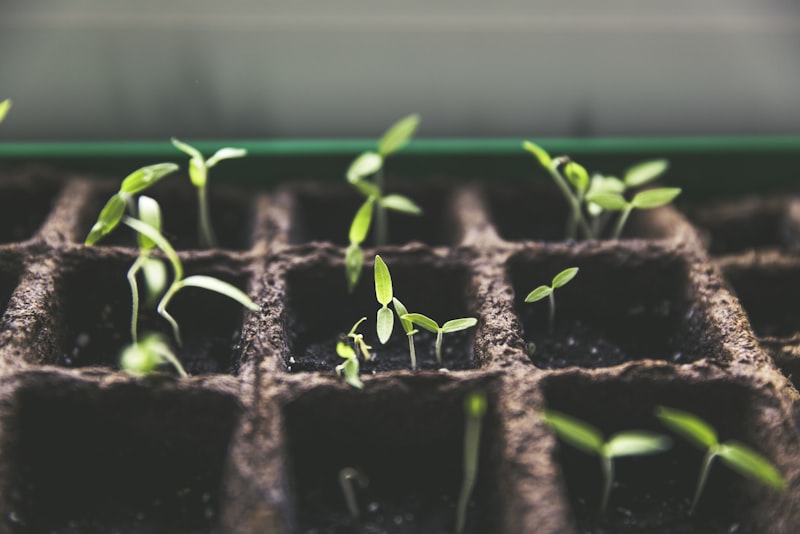
So the foundation of natural pest control is simply good growing. Give each plant the light it actually wants, water it properly, feed the soil with compost, and don't crowd everything together. A plant that has what it needs builds thicker tissue, recovers faster from damage, and is far less likely to be overwhelmed in the first place.
The best pest spray I never bought was a season of healthy soil and plants strong enough to shrug off the nibbles.
This is also why I tell new gardeners not to panic over a few holes in a few leaves. A robust plant can lose a surprising amount of foliage and carry on perfectly well. A little damage is not a crisis — it's the normal, livable cost of having a real, living garden rather than a plastic one.
Invite the Good Bugs to Dinner#
Your garden is full of insects that hunt the very pests you're worried about, and they'll work for free if you let them. Ladybugs and their hungry larvae devour aphids by the dozen. Lacewings, hoverflies, and certain tiny wasps go after soft-bodied pests with impressive appetite. Ground beetles patrol the soil for slugs and grubs. These are your allies, and a thriving garden keeps them around.
The trick to recruiting them is twofold. First, plant a variety of flowers, especially small, simple, nectar-rich blooms that give beneficial insects somewhere to feed and shelter. A garden with diverse flowering plants stays far better policed than a bare monoculture. Second — and this is the part people forget — go easy on the sprays. Even "natural" sprays can kill the helpers along with the pests. Every time you blanket your plants with something, you're potentially firing your own workforce.
Give it a season of patience. When you stop reaching for sprays and start feeding the good bugs, an outbreak of aphids often resolves itself within a week or two as the predators move in to feast. Letting nature catch up takes nerve the first time, but it usually works.
Barriers and Bare Hands Go a Long Way#
For the pests your insect allies don't fully handle, the next tools are wonderfully low-tech: physical barriers and your own two hands.
Hand-picking sounds tedious, but it's genuinely one of the most effective methods for larger, visible pests. An evening stroll with a container of soapy water, plucking off caterpillars, beetles, or slugs and dropping them in, can clear a problem that no spray would touch as cleanly. Ten minutes a few evenings in a row often ends an infestation entirely. It's oddly satisfying, and it targets only the culprits.
Barriers stop pests before they ever reach the plant:
- Lightweight row covers keep flying insects off vulnerable young crops while still letting light and water through.
- Collars set around seedling stems block cutworms from chewing them off at the base.
- A rinse of water from the hose knocks aphids and mites off leaves, and many never make it back.
And don't underestimate a simple, sharp blast of water. For soft pests clustered on a stem, spraying them off with plain water several days running can be enough on its own — no chemicals, no harm to anything else.
If You Do Reach for a Spray#
Sometimes, despite your best efforts, a pest population explodes and threatens to overwhelm a plant you care about. That's when it can make sense to consider a product — but as a targeted, last step, not a reflex.
When you get there, choose the gentlest, most specific option you can, and treat only the affected plant rather than dousing the whole garden. Read the label before you do anything. The label tells you what the product controls, which plants it's safe for, how much to use, and when to apply it. Those instructions exist for your safety, your plants' safety, and the safety of pollinators — and using more than directed never helps and often harms.
A few sensible habits make any treatment safer. Apply in the evening or early morning when bees aren't actively foraging. Spot-treat the specific pest rather than spraying broadly. And keep in mind that anything strong enough to kill pests can also harm beneficial insects, so the goal is always the smallest, most precise intervention that solves the problem.
Work With Your Garden, Not Against It#
The real secret to natural pest control isn't a clever recipe or a miracle plant. It's a change of attitude. When you stop seeing every insect as an enemy and start seeing your garden as a living community, your whole approach softens — and, happily, gets more effective.
Grow strong plants. Welcome the helpful bugs. Pick off and block the troublemakers by hand. Tolerate a little imperfection, and save sprays for true emergencies. Do that, and you'll find your garden largely takes care of itself, humming along in a rough, resilient balance that's far healthier than anything you could enforce with a bottle. Every gardener loses a plant or a crop now and then — but the natural way leaves you with a garden full of life, which is rather the point.